 PEARSON PLC ORD 25P PSON.L
 DIAGEO PLC ORD 28 101/108P DGE.L
 RECKITT BENCKISER GROUP PLC ORD RKT.L
 LLOYDS BANKING GROUP PLC ORD 10 LLOY.L
 MELROSE INDUSTRIES PLC ORD GBP0 MRO.L
 FRESNILLO PLC ORD USD0.50 FRES.L
 NATWEST GROUP PLC ORD 107.69P NWG.L
 WEIR GROUP PLC ORD 12.5P WEIR.L
 STANDARD CHARTERED PLC ORD USD0 STAN.L
 ENDEAVOUR MINING PLC ORD USD0.0 EDV.L
 OCADO GROUP PLC ORD 2P OCDO.L
 ANGLO AMERICAN PLC ORD USD0.623 AAL.L
 BAE SYSTEMS PLC ORD 2.5P BA.L
 VODAFONE GROUP PLC ORD USD0.20 VOD.L
 HSBC HOLDINGS PLC ORD $0.50 (UK HSBA.L
 GLENCORE PLC ORD USD0.01 GLEN.L
 UNITE GROUP PLC ORD 25P UTG.L
 CRODA INTERNATIONAL PLC ORD 10. CRDA.L
 KINGFISHER PLC ORD 15 5/7P KGF.L
 TAYLOR WIMPEY PLC ORD 1P TW.L
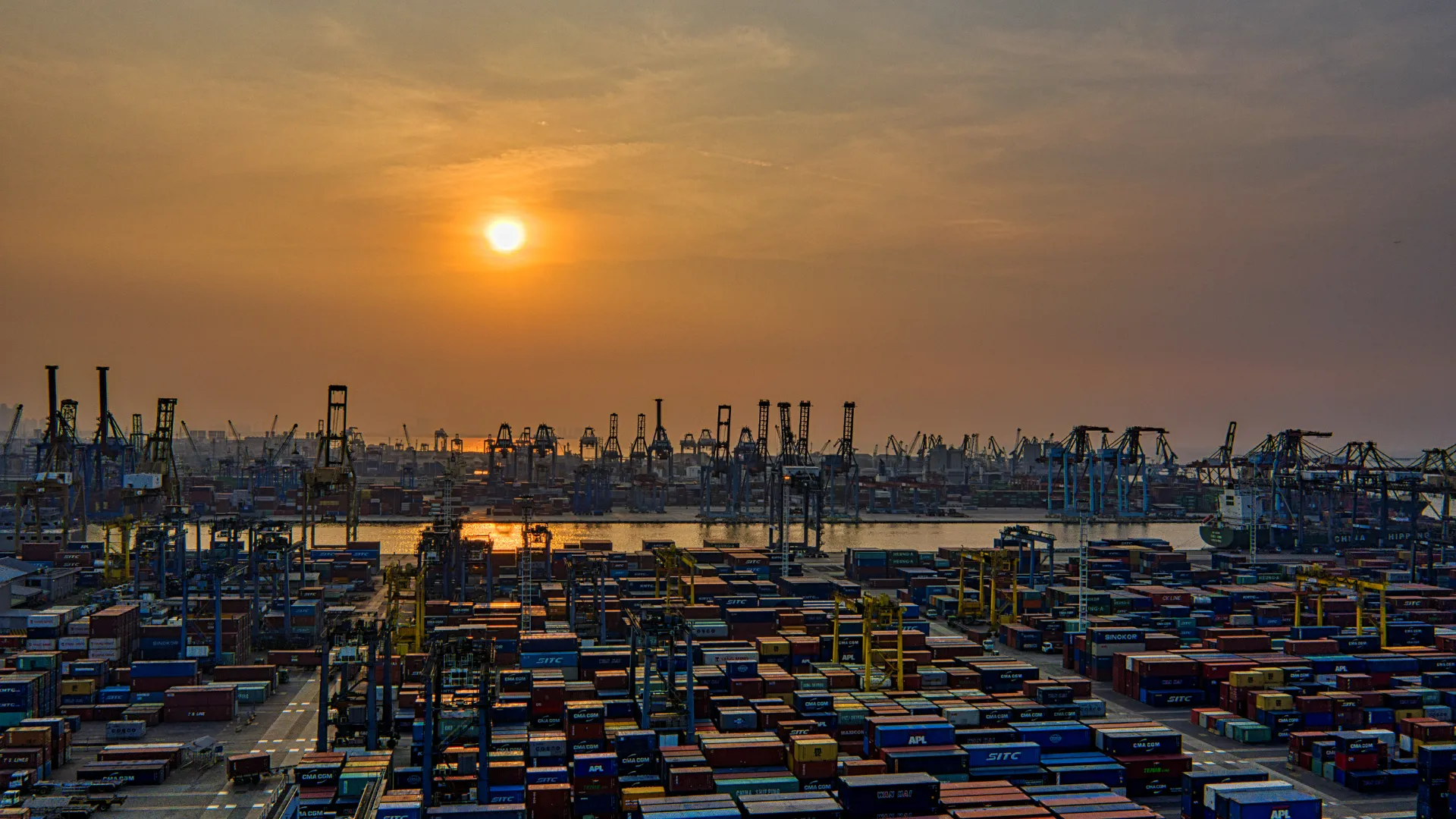
With this deal, Indonesia becomes Canada’s biggest export market in Southeast Asia. This opens up many more opportunities for Canadian expansion in the fast-growing region, and the government could soon turn to the Philippines to ink a deal, as part of its expansion strategy.
Canadian Minister for International Trade, Maninder Sidhu, confirmed that Canada could allow up to 95% duty-free access to Indonesian exports over the next year. The Comprehensive Economic Partnership Agreement signed between Canada and Indonesia is the first major economically strategic deal Ottawa has signed in the Indo-Pacific since Mark Carney took charge as Prime Minister.
With US President Donald Trump’s protectionist policies drastically altering supply chains, Carney came to power promising to diversify its export reliance away from the US. Sidhu explained that as Indonesia is one of Southeast Asia’s biggest markets, the two countries have much room for collaboration in agriculture, energy, aerospace, defence and telecom.
The Minister said that Jakarta was considering opting for Canadian small modular reactors, which are new and more compact nuclear reactors. He also said that the agreement would be ratified by both countries within a year and that bilateral trade between Canada and Indonesia could grow twofold in the next six years.
The US is Canada’s biggest trading partner, with bilateral trade crossing C$1 trillion last year. Indonesia is a smaller market and is not even among Canada’s top 10 trading partners. Last year, total trade between the two countries was approximately C$5 billion. Therefore, this new agreement indicates that the Great White North is looking not only to diversify its supply chain but also to expand trade with countries which have not been large-scale suppliers.
With this deal, Indonesia becomes Canada’s biggest export market in Southeast Asia. According to Sidhu, this opens up many more opportunities for expansion in the fast-growing region, who said that the government could soon turn to the Philippines to ink a deal, as part of its Southeast Asian expansion strategy. He also said that he would personally be travelling to the region quite frequently over the next few months to discuss trade opportunities with countries like Malaysia, South Korea and Japan.
Washington has been alienating its neighbours and allies with a series of tariffs and counter-tariffs. After the US, with Trump at the helm, has proved to be an unreliable trade partner, Carney’s government has decided to look eastwards. Sidhu said that he is likely to visit China in November with the hope of de-escalating a trade war which has harmed critical industries in both Beijing and Ottawa.
China is Canada’s second-largest trading partner, and Carney said earlier this week that he held ‘constructive’ trade talks with Chinese Premier Li Qiang and is hopeful that this dialogue will deepen in the future. The two countries were engaged in a tariff war when the Canadian government imposed levies on Chinese electric vehicles, steel and aluminium last year. Beijing, in turn, levied taxes on Canadian canola imports, but maintained that these measures were just preliminary and that there was always room for open dialogue.
The two countries have no major reasons for conflict; the recent tariff barrage imposed by Trump appears to have made unlikely allies of the two. The Canadian Prime Minister’s Office stated that when Carney and Li met at the UN in New York, the pair discussed agriculture and agri-food products, such as canola, as well as seafood and EVs.
China’s official news agency Xinhua reported that Li hoped that with this new phase of improving China-Canada relations, efforts to establish the ‘correct’ understanding of China would be taken by the Canadians, and that both countries would grow to respect each other’s interests and concerns further. He hopes that this would help lay a foundation of strong bilateral relations and cooperation between the two countries.
Trump’s targeting of Canada, like his efforts to target and isolate any other country, has only resulted in efforts to move away from reliance on the US and help establish a more multipolar world order. Canada’s entry into the Southeast Asian region can help position it as a desirable market and ally in the North American continent, a position held so long by the US in the eyes of most countries across the globe.