 PEARSON PLC ORD 25P PSON.L
 DIAGEO PLC ORD 28 101/108P DGE.L
 RECKITT BENCKISER GROUP PLC ORD RKT.L
 LLOYDS BANKING GROUP PLC ORD 10 LLOY.L
 MELROSE INDUSTRIES PLC ORD GBP0 MRO.L
 Fresnillo plc FRES.L
 NATWEST GROUP PLC ORD 107.69P NWG.L
 WEIR GROUP PLC ORD 12.5P WEIR.L
 STANDARD CHARTERED PLC ORD USD0 STAN.L
 ENDEAVOUR MINING PLC ORD USD0.0 EDV.L
 Ocado Group plc OCDO.L
 ANGLO AMERICAN PLC ORD USD0.623 AAL.L
 BAE SYSTEMS PLC ORD 2.5P BA.L
 VODAFONE GROUP PLC ORD USD0.20 VOD.L
 HSBC HOLDINGS PLC ORD $0.50 (UK HSBA.L
 GLENCORE PLC ORD USD0.01 GLEN.L
 UNITE GROUP PLC ORD 25P UTG.L
 Croda International Plc CRDA.L
 KINGFISHER PLC ORD 15 5/7P KGF.L
 TAYLOR WIMPEY PLC ORD 1P TW.L
The newly announced defence budget forms part of China’s broader fiscal and economic policy framework unveiled alongside its 2026 economic targets.
China’s decision to increase its defence spending by 7 per cent in 2026 represents a careful balancing act between economic realities and geopolitical ambition. Announced during the annual session of the National People’s Congress in Beijing, the budget rise lifts China’s official military expenditure to roughly 1.9 trillion yuan, or about $275–277 billion. Although this increase marks the slowest pace of growth since 2021, it still reinforces China’s position as the world’s second-largest military spender and underscores Beijing’s determination to modernise its armed forces amid a shifting global security landscape.
The decision comes at a time when China is navigating multiple economic pressures at home while confronting intensifying strategic competition abroad. The modest pace of defence growth compared with previous years signals a more cautious fiscal posture, yet it simultaneously confirms that military modernisation remains a central pillar of China’s national strategy.
The newly announced defence budget forms part of China’s broader fiscal and economic policy framework unveiled alongside its 2026 economic targets. Beijing has set a GDP growth goal of approximately 4.5 to 5 per cent, one of the most modest targets in decades. Despite this slowdown, defence spending continues to expand faster than overall economic growth, reflecting the priority that Chinese leadership attaches to national security and military capability.
The 7 per cent increase follows several years of similar annual rises around 7.1 to 7.2 per cent, indicating a deliberate strategy of steady and predictable military investment rather than sudden expansion. Over the past decade, China has adopted a consistent approach of maintaining single-digit growth in defence spending while ensuring continuous improvements in technological capability, force structure and operational readiness.
At its core, this funding is directed towards the modernisation of the People’s Liberation Army, which Beijing aims to transform into a world-class military by 2035. The budget supports advanced weapons procurement, research and development in emerging technologies, improved training and logistical capabilities, and expanded maritime and air power.
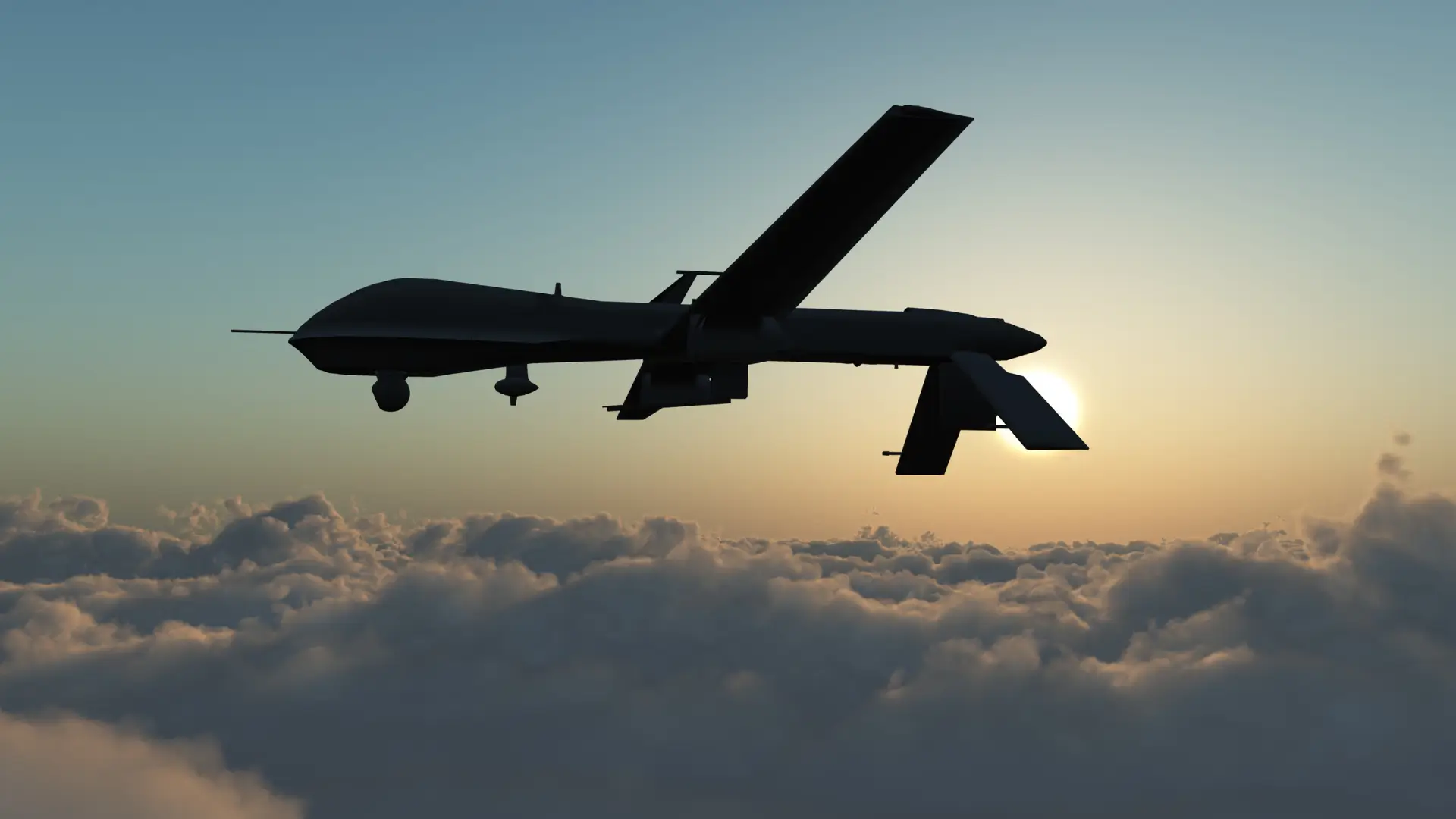
China’s military modernisation strategy is deeply intertwined with its broader technological ambitions. In recent years, Beijing has invested heavily in advanced weapons systems, cyber capabilities, artificial intelligence-driven warfare, and next-generation aerospace technologies. The development of stealth aircraft, advanced missile systems and expanded naval fleets illustrates the scale of China’s transformation from a traditionally land-focused force into a technologically sophisticated military power.
The rapid expansion of naval and air capabilities has been particularly notable. Under President Xi Jinping’s leadership, the Chinese navy has expanded significantly in both size and sophistication, while new aircraft carriers and advanced fighter jets are reshaping the country’s power projection capacity.
Such investments are intended to enable the People’s Liberation Army to operate effectively in multiple domains, including space and cyber warfare, areas increasingly viewed as decisive in modern conflict. China’s leadership has repeatedly emphasised the importance of “informatised” and “intelligentised” warfare, signaling a strategic shift towards data-driven military operations.
China’s defence spending increase also reflects rising tensions across the Indo-Pacific region, particularly regarding Taiwan and maritime disputes in the South China Sea. Beijing has repeatedly reaffirmed its stance that Taiwan is an integral part of China and has warned against foreign interference or moves towards formal independence.
Military modernisation therefore, serves both a deterrent and strategic signalling function. By strengthening its armed forces, China aims to project credibility in territorial disputes and maintain leverage in regional geopolitics. This is especially relevant in the context of increasing US military presence in the Indo-Pacific and the strengthening of security partnerships among regional actors such as Japan, Australia and India.
Security analysts note that the trajectory of Chinese defence spending continues to influence the strategic calculations of neighbouring states. Japan has voiced concerns about transparency in China’s military budgeting, while other regional governments closely monitor developments in Beijing’s defence posture.