 PEARSON PLC ORD 25P PSON.L
 DIAGEO PLC ORD 28 101/108P DGE.L
 RECKITT BENCKISER GROUP PLC ORD RKT.L
 LLOYDS BANKING GROUP PLC ORD 10 LLOY.L
 MELROSE INDUSTRIES PLC ORD GBP0 MRO.L
 FRESNILLO PLC ORD USD0.50 FRES.L
 NATWEST GROUP PLC ORD 107.69P NWG.L
 WEIR PLC ORD 12.5P WEIR.L
 STANDARD CHARTERED PLC ORD USD0 STAN.L
 ENDEAVOUR MINING PLC ORD USD0.0 EDV.L
 OCADO GROUP PLC ORD 2P OCDO.L
 ANGLO AMERICAN PLC ORD USD0.623 AAL.L
 BAE SYSTEMS PLC ORD 2.5P BA.L
 VODAFONE GROUP PLC ORD USD0.20 VOD.L
 HSBC HOLDINGS PLC ORD $0.50 (UK HSBA.L
 GLENCORE PLC ORD USD0.01 GLEN.L
 UNITE GROUP PLC ORD 25P UTG.L
 CRODA INTERNATIONAL PLC ORD 10. CRDA.L
 KINGFISHER PLC ORD 15 5/7P KGF.L
 TAYLOR WIMPEY PLC ORD 1P TW.L
EU officials confirmed that the Commission’s assessment, which drew on both classified and non-classified evidence submitted by few member states, identified specific scenarios in which inverters from high-risk countries could be used to disrupt grid stability, potentially triggering large-scale blackouts.
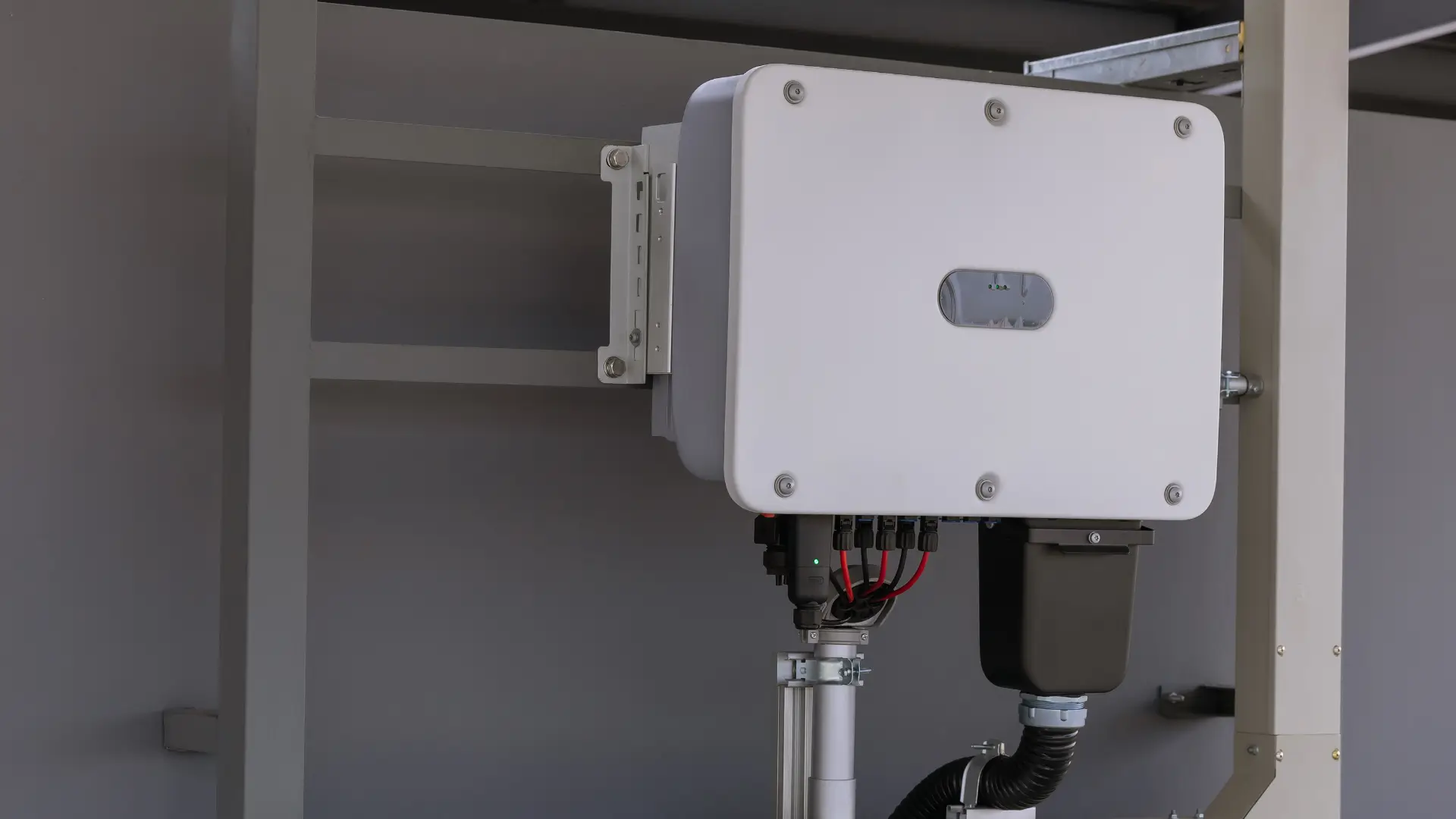
Europe’s clean energy buildout has long rested on a foundation of Chinese-made hardware. That foundation is now being deliberately dismantled. On May 4, 2026, the European Commission announced it would restrict the use of EU funds for renewable energy and battery storage projects that rely on inverters from so-called high-risk suppliers, a category that officially encompasses China, Russia, Iran, and North Korea, but which in practical terms is aimed squarely at China, the country that controls roughly 80% of global inverter supply.
The decision, framed explicitly as an economic security measure rather than industrial policy, marks the most direct action Brussels has taken to sever a technology dependency that analysts have long flagged as a structural vulnerability in Europe’s energy transition. It covers all EU financing instruments, both direct and indirect, including the European Investment Bank and the European Investment Fund. The EIB alone funded approximately 20% of EU solar deployment in 2025, meaning the ban carries immediate and substantial financial weight across an enormous pipeline of projects.
EU officials confirmed that the Commission’s assessment, which drew on both classified and non-classified evidence submitted by few member states, identified specific scenarios in which inverters from high-risk countries could be used to disrupt grid stability, potentially triggering large-scale blackouts. The stakes are higher than they might appear from the component’s modest size, which is typically accounting to around 5% of the cost of a large-scale solar installation, but their failure or manipulation can destabilise entire grid segments.
The scale of Europe’s dependency on Chinese inverter technology has been accumulating for years. According to think tank Loom, Chinese producers accounted for 61% of Europe’s inverter imports in 2024, alongside 88% of lithium-ion battery imports and 98% of solar panel imports. Huawei and Sungrow ranked as the world’s top two solar inverter manufacturers in the first half of 2025, ahead of Germany’s SMA and Austria’s Fronius, according to consultancy Wood Mackenzie.
While initial media coverage of the announcement focused on solar inverters, a news outlet confirmed through documents seen by its reporters that battery energy storage systems and their Power Conversion Systems are explicitly included in the guidance. This is a significant expansion of the ban’s reach. Many battery storage systems shipped from Asian manufacturers come as integrated units that bundle cells with the PCS, meaning the restriction affects not just the inverter as a standalone component but whole-system procurement strategies for utility-scale storage projects.
Christoph Podewils, Secretary General of the European Solar Manufacturing Council, confirmed that the restrictions contain no exemptions based on power class and extend to inverters supplied by entities under the control of high-risk countries. This means a company manufacturing inverters in Europe but owned or controlled by a Chinese parent entity would also fall under the ban. The Commission does not, however, currently address the sourcing of passive components used within those inverters, such as IGBTs and MOSFETs, which may still be sourced from Chinese suppliers by European manufacturers.
The Chinese response has been swift and pointed. China’s Ministry of Commerce rejected the EU’s characterisation outright, stating that Brussels had designated China as a high-risk country without factual evidence. This move would risk mutual trust, disrupt bilateral trade cooperation, and destabilise global clean energy supply chains. MOFCOM warned that it would assess the impact on Chinese enterprises and reserves the right to take countermeasures.
The China Chamber of Commerce to the EU urged Brussels to uphold principles of technology neutrality and non-discrimination. They argued that framing standard commercial technologies in geopolitical terms risks over-securitising the sector and undermining fair competition.
The tension is real. Europe cannot rapidly decarbonise without scaling storage and generation infrastructure, and Chinese suppliers have provided that infrastructure at price points that made the transition economically viable. The Loom data on solar panel and battery import concentrations are 98% and 88%, respectively. This underscores how far the broader dependency extends beyond inverters alone.