 PEARSON PLC ORD 25P PSON.L
 DIAGEO PLC ORD 28 101/108P DGE.L
 RECKITT BENCKISER GROUP PLC ORD RKT.L
 LLOYDS BANKING GROUP PLC ORD 10 LLOY.L
 MELROSE INDUSTRIES PLC ORD GBP0 MRO.L
 FRESNILLO PLC ORD USD0.50 FRES.L
 NATWEST GROUP PLC ORD 107.69P NWG.L
 WEIR PLC ORD 12.5P WEIR.L
 STANDARD CHARTERED PLC ORD USD0 STAN.L
 ENDEAVOUR MINING PLC ORD USD0.0 EDV.L
 OCADO GROUP PLC ORD 2P OCDO.L
 ANGLO AMERICAN PLC ORD USD0.623 AAL.L
 BAE SYSTEMS PLC ORD 2.5P BA.L
 VODAFONE GROUP PLC ORD USD0.20 VOD.L
 HSBC HOLDINGS PLC ORD $0.50 (UK HSBA.L
 GLENCORE PLC ORD USD0.01 GLEN.L
 UNITE GROUP PLC ORD 25P UTG.L
 CRODA INTERNATIONAL PLC ORD 10. CRDA.L
 KINGFISHER PLC ORD 15 5/7P KGF.L
 TAYLOR WIMPEY PLC ORD 1P TW.L
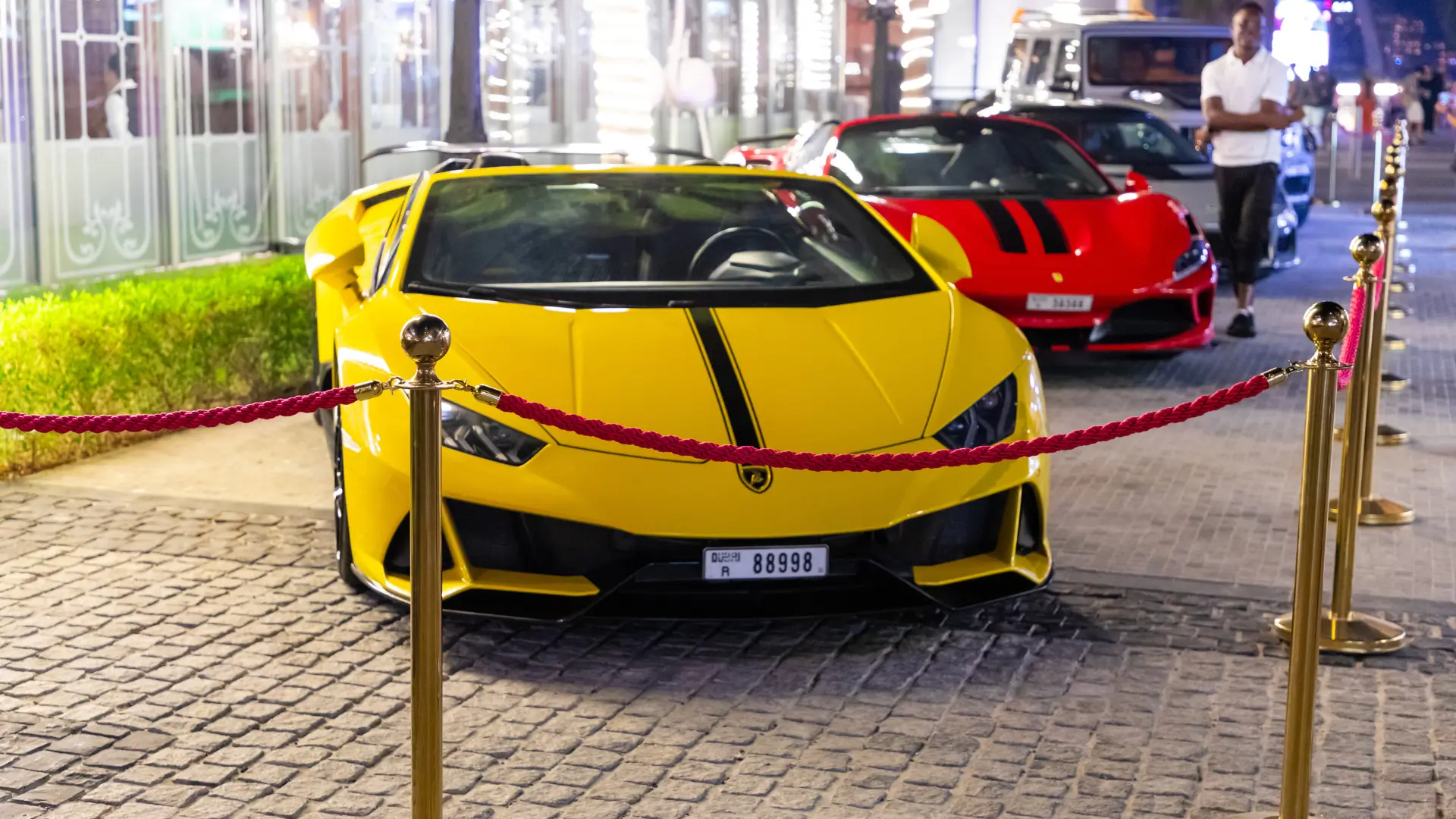
Chief Executive Stephan Winkelmann emphasised that Lamborghini’s exclusive business model continues to provide stability during volatile economic conditions.
The global luxury automotive industry is entering a more challenging phase as economic uncertainty, geopolitical tensions and shifting consumer demand reshape the market. Even the world’s most prestigious performance car brands are no longer immune to these pressures. Italian supercar manufacturer Lamborghini has reported a decline in operating profit for the first half of 2026, highlighting the growing impact of international trade barriers, regional conflicts and currency volatility on premium manufacturers.
While the company’s financial results remain stronger than many of its competitors, the latest figures underline a significant shift in the luxury car sector. The era of uninterrupted growth is giving way to a business environment where resilience, strategic planning and brand strength are becoming just as important as engineering excellence.
Lamborghini posted an operating profit of €395 million during the first six months of 2026, representing a decline of more than 8% compared with €431 million recorded during the same period last year. Its operating margin also narrowed to 22.7%, down from 26.5%, reflecting increased pressure on profitability despite continued demand for its exclusive vehicles.
Despite weaker earnings, Lamborghini delivered a notable achievement by recording its highest first-half revenue in the company’s history. Revenue climbed 7.4% to €1.74 billion, demonstrating that the brand continues to command premium pricing and strong customer loyalty. However, vehicle deliveries slipped by 4.6% to 5,422 units, indicating that broader market conditions are beginning to influence purchasing decisions even among affluent buyers.
Company executives attributed the weaker profitability primarily to higher United States import tariffs introduced last year, adverse foreign exchange movements and increasing geopolitical instability across several regions, particularly the Middle East. These factors have added costs throughout the supply chain while creating greater uncertainty for international luxury manufacturers operating across multiple continents.
The luxury vehicle market has also been affected by slower demand in China, traditionally one of the world’s largest markets for premium automobiles. Combined with softer European consumer confidence and ongoing international trade disputes, the industry has experienced a contraction estimated at 7.7% during the first half of the year. Against this backdrop, Lamborghini’s revenue growth stands out as a relatively resilient performance, even though profitability has weakened.
Chief Executive Stephan Winkelmann emphasised that Lamborghini’s exclusive business model continues to provide stability during volatile economic conditions. According to the company, maintaining limited production volumes, preserving brand exclusivity and focusing on high-value customers remain central to its long-term strategy. These principles have helped Lamborghini outperform several rivals facing steeper declines across the premium automotive segment.
The company also continues to benefit from a refreshed product portfolio. The Revuelto, Urus SE and Temerario now form Lamborghini’s complete hybrid-powered line-up, representing an important milestone in its transition towards electrified performance vehicles. Deliveries of the Temerario began during the first quarter, while demand for both the Revuelto and Urus SE remains healthy, with order books extending to approximately one year.
Nevertheless, the wider automotive landscape remains uncertain. Parent company Volkswagen recently withdrew its 2026 sales growth target after reporting a sharp decline in quarterly operating profit, reflecting the broader challenges facing Europe‘s automotive industry. Rising tariffs, increasing production costs, evolving emissions regulations and geopolitical instability continue to weigh heavily on manufacturers ranging from mass-market producers to ultra-luxury brands.
Industry analysts believe luxury manufacturers will increasingly rely on operational efficiency, technological innovation and disciplined production strategies to protect margins. Unlike volume manufacturers, premium brands possess greater pricing power, but even they cannot entirely escape macroeconomic disruptions when global trade becomes more fragmented and financial markets remain volatile.
Looking ahead, Lamborghini enters the second half of 2026 with cautious optimism. The launch of the new Urus SE Performante, continued investment in hybrid technology and a robust order pipeline provide encouraging signs for future performance. However, sustained geopolitical uncertainty, evolving tariff policies and fluctuating exchange rates are likely to remain key variables influencing profitability throughout the remainder of the year.
For investors and industry observers alike, Lamborghini’s latest results serve as an important reminder that even the world’s most desirable luxury brands are not insulated from global economic realities. Strong revenues and enduring brand appeal continue to position the Italian marque favourably, yet the latest earnings illustrate how rapidly changing geopolitical conditions can reshape financial performance across the luxury automotive sector. As international markets continue to evolve, Lamborghini’s ability to balance exclusivity, innovation and operational resilience will determine whether it can maintain its competitive edge in an increasingly unpredictable global economy.