 PEARSON PLC ORD 25P PSON.L
 DIAGEO PLC ORD 28 101/108P DGE.L
 RECKITT BENCKISER GROUP PLC ORD RKT.L
 LLOYDS BANKING GROUP PLC ORD 10 LLOY.L
 MELROSE INDUSTRIES PLC ORD GBP0 MRO.L
 FRESNILLO PLC ORD USD0.50 FRES.L
 NATWEST GROUP PLC ORD 107.69P NWG.L
 WEIR PLC ORD 12.5P WEIR.L
 STANDARD CHARTERED PLC ORD USD0 STAN.L
 ENDEAVOUR MINING PLC ORD USD0.0 EDV.L
 OCADO GROUP PLC ORD 2P OCDO.L
 ANGLO AMERICAN PLC ORD USD0.623 AAL.L
 BAE SYSTEMS PLC ORD 2.5P BA.L
 VODAFONE GROUP PLC ORD USD0.20 VOD.L
 HSBC HOLDINGS PLC ORD $0.50 (UK HSBA.L
 GLENCORE PLC ORD USD0.01 GLEN.L
 UNITE GROUP PLC ORD 25P UTG.L
 CRODA INTERNATIONAL PLC ORD 10. CRDA.L
 KINGFISHER PLC ORD 15 5/7P KGF.L
 TAYLOR WIMPEY PLC ORD 1P TW.L
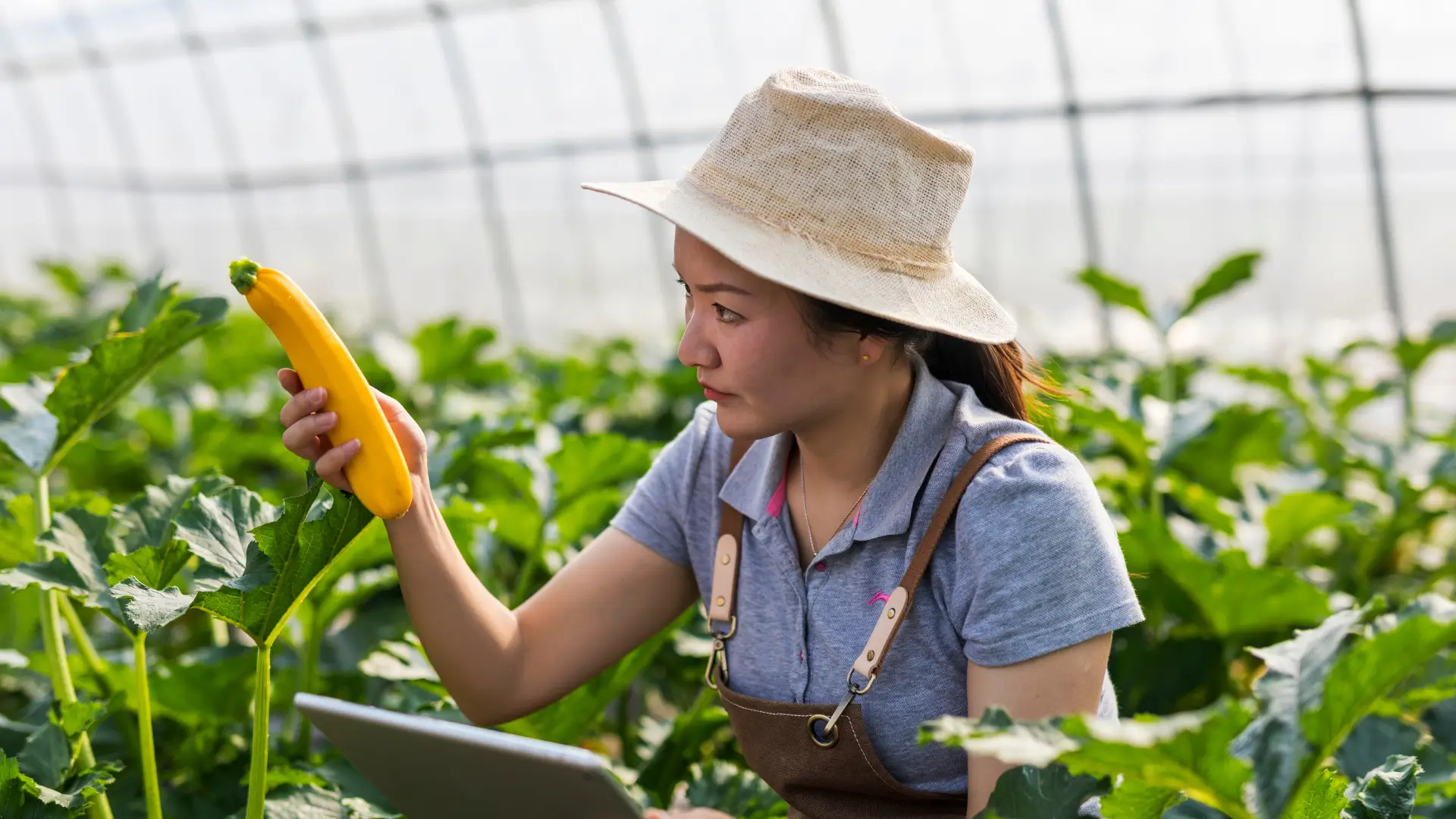
Controlled-environment agriculture is another powerful catalyst. Vertical farms, hydroponic systems and smart greenhouses allow crops to be grown in tightly regulated conditions, independent of traditional climate constraints.
The global agricultural sector is undergoing a structural transformation of a scale not witnessed since the mechanisation era. What was once an industry driven primarily by inputs-land, labour, fertiliser and water-is rapidly evolving into a data-centric ecosystem powered by software, sensors and intelligent automation. At the centre of this shift sits the smart agriculture market, projected to reach approximately $83.7 billion by 2033, expanding at a robust compound annual growth rate of around 14.6 per cent.
This growth is not merely cyclical; it reflects a deeper reconfiguration of how food is produced, managed and monetised. Increasing global population pressures, resource scarcity and climate volatility are forcing agriculture to adopt the principles of precision, efficiency and predictability-principles long associated with advanced manufacturing and digital industries.
Automation and artificial intelligence are at the core of this evolution. From autonomous tractors to AI-driven crop analytics, farming is becoming increasingly software-defined. Technologies such as Internet of Things (IoT) sensors, satellite imaging and machine learning models enable farmers to monitor soil health, weather patterns and crop performance in real time, thereby reducing waste and improving yield quality.
Controlled-environment agriculture is another powerful catalyst. Vertical farms, hydroponic systems and smart greenhouses allow crops to be grown in tightly regulated conditions, independent of traditional climate constraints. These systems significantly shorten production cycles and enable year-round harvesting, offering a compelling solution to urban food security challenges and supply chain disruptions.
From a business perspective, one of the most notable developments is the growing convergence between Big Tech and agriculture. Technology firms are no longer peripheral enablers; they are becoming central stakeholders in the agricultural value chain. Cloud platforms, data analytics services and AI tools are increasingly being tailored specifically for farming applications. This has led to strategic partnerships between agri-businesses and technology providers, reshaping competitive dynamics and accelerating innovation cycles.
Equally significant is the emergence of Software-as-a-Service (SaaS) models in agriculture. Farmers are transitioning from one-time purchases of machinery to subscription-based advisory platforms that provide continuous insights. These platforms offer predictive analytics on crop yields, pest outbreaks and weather risks, effectively transforming farming into a data subscription business. The shift mirrors trends seen in other industries, where recurring revenue models are replacing traditional capital expenditure-heavy approaches.
Historically, hardware has dominated the smart agriculture market, accounting for a substantial share of revenues due to demand for drones, sensors and automated machinery. However, the fastest growth is now occurring in software and services. As connectivity improves and digital literacy rises among farmers, the value is steadily migrating from physical equipment to data interpretation and decision-making tools.
This transition is redefining revenue streams across the sector. Equipment manufacturers are increasingly bundling hardware with digital services, while new entrants are focusing exclusively on analytics and platform-based offerings. The result is a layered ecosystem in which value is created not just by producing crops, but by optimising every stage of the production process through data.
Labour dynamics are also playing a crucial role in this transformation. With an ageing farming workforce and persistent labour shortages, automation is becoming less of an and more of a necessity. AI-powered systems are taking over repetitive and labour-intensive tasks, allowing farmers to focus on higher-value strategic decisions. This shift is elevating the role of the farmer from manual operator to data-driven manager, fundamentally altering the skill set required in modern agriculture.
Perhaps the most profound insight emerging from this transformation is the shift from input-driven to data-driven economics. In traditional agriculture, success was largely determined by the quantity of inputs applied. In smart agriculture, success hinges on the quality of decisions derived from data. Every input-whether water, fertiliser or labour-is optimised through precise, real-time insights.